
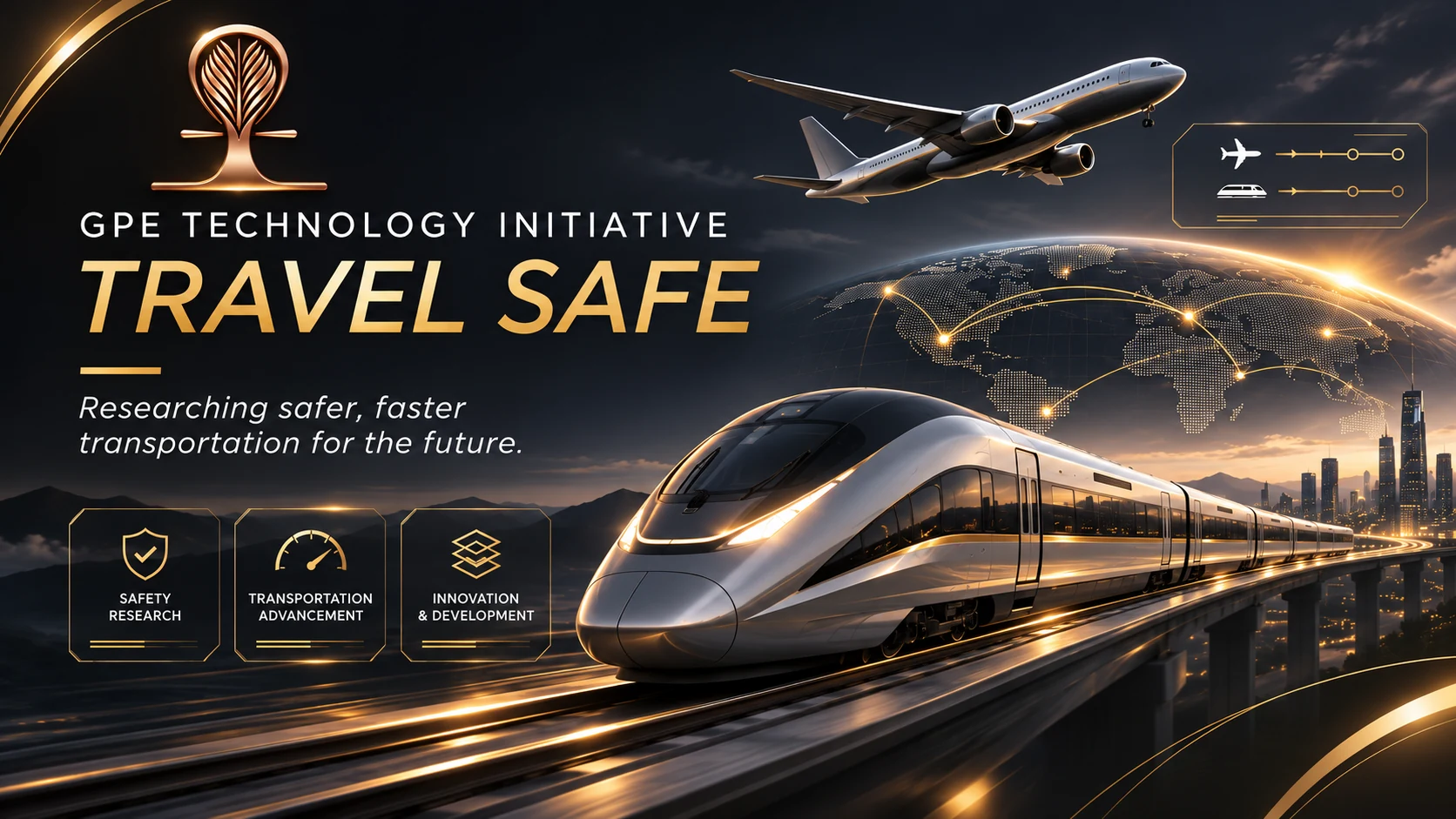
Giezwa Pierre Enterprises (GPE) is outlining a founder-led technology research vision focused on a question that affects families and communities everywhere: how can long-distance transportation become faster, more accessible, and safer when unexpected events happen? King Giezwa Monarch envisions an innovation effort that treats human life as the primary design requirement.
Layered safety in aviation
The proposed initiative explores multiple approaches rather than a single vehicle or product. An aviation research track would examine ways to prevent loss-of-control incidents, recognize system failures earlier, improve occupant protection, strengthen emergency response, and investigate more resilient evacuation options after survivable landings.
The founder's broader ambition includes having more than one safe escape pathway available in aviation emergencies. Existing commercial airplanes already have certified exits and evacuation procedures. New concepts must be evaluated against actual flight conditions, aircraft structures, human factors, and FAA requirements. GPE is not proposing that travelers attempt to exit an aircraft in flight or suggesting that a new midair passenger escape mechanism has been shown to work.
High-speed rail as another option
A separate surface transportation track would explore high-speed passenger rail systems that could offer an alternative to some flights. Research questions include protected track corridors, train-control redundancy, braking systems, crashworthiness, accessible egress, emergency response and station design. The idea of ground travel at supersonic speeds is an ambitious feasibility question, not an available technology or a promise of safe commercial operation.
Evidence before engineering claims
GPE's approach would begin with reviews of existing engineering research and standards, followed by partnerships with appropriately qualified specialists, hazard analysis, modeling, prototype testing, and regulatory engagement as relevant. No aircraft, rail line, physical demonstrator, scientific breakthrough, certification, guaranteed speed or fatality-reduction result is being announced.
The founder hopes this work will support a much broader long-term idea generation program across GPE technology projects. The number of concepts ultimately pursued and any commercial outcomes depend on future research, investment, expertise and independent technical evaluation. It would be misleading to describe those aims as funded deployments or completed inventions.
Responsible collaboration
The initiative is presented as a GPE corporate research direction associated with King Giezwa Monarch's wider public vision. The United Monarchy of Giezwa remains a separate institution; this announcement does not identify it as an aviation regulator, transportation operator, manufacturer or funder.
GPE invites constructive introductions from aviation and rail safety specialists, university researchers, emergency-response experts, accessibility advocates, manufacturers and qualified commercial partners. The full research agenda explains the present concept-stage status and links directly to public primary-source safety standards. Interested parties can use GPE's existing business inquiry process.